We use cookies on this site to enhance your user experience
By clicking the Accept button, you agree to us doing so. More info on our cookie policy
We use cookies on this site to enhance your user experience
By clicking the Accept button, you agree to us doing so. More info on our cookie policy
Short range off grid messaging
Meshtastic is an implementation of LORA radios for messaging and other telemetry.
Meshtastic does not require a license and so is available to many more people in our local neighbourhoods.
I have had no experience with meshtastic but have some devices on the way so will update this page with my experiences.
The Comms Channel have developed a BBS for meshtastic.
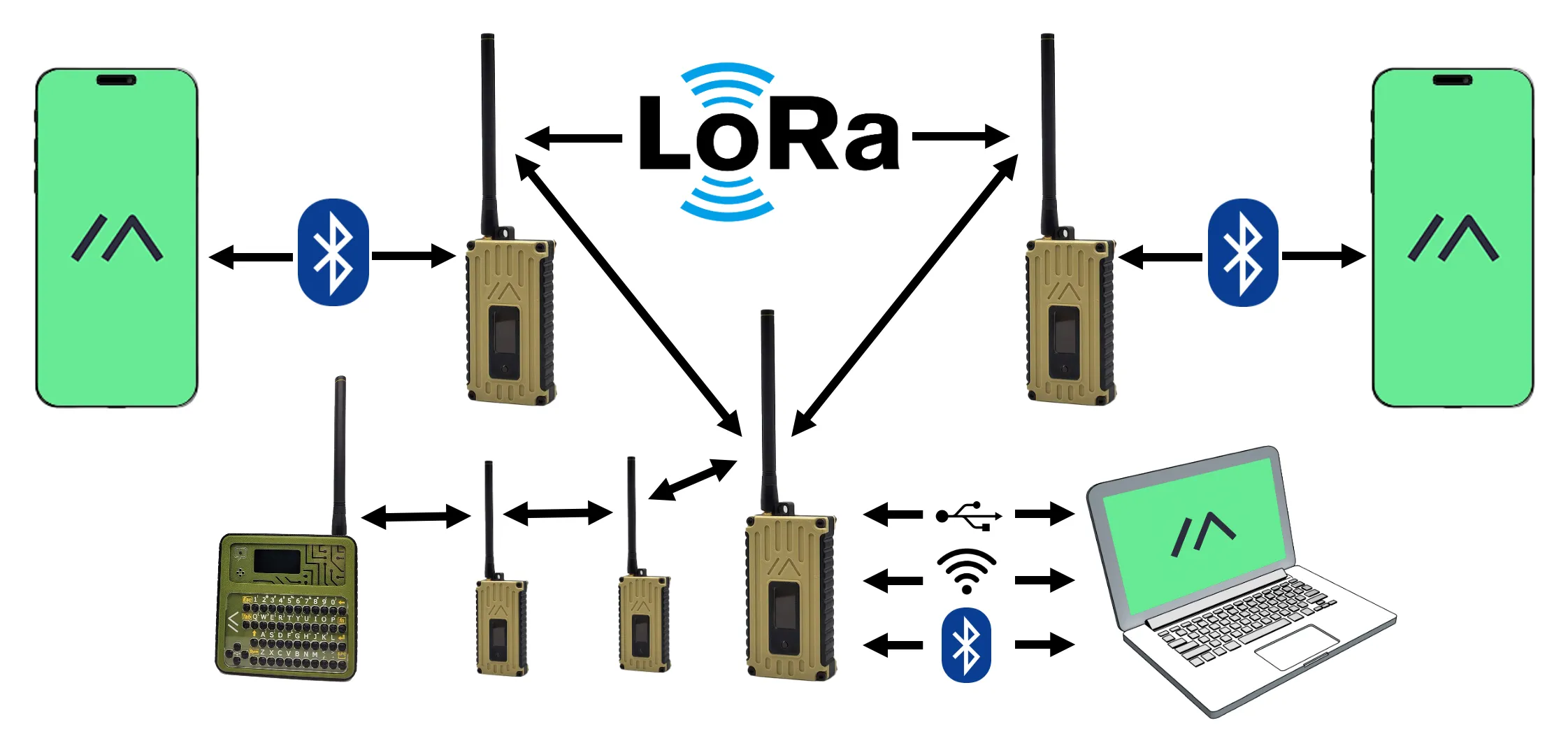
Meshtastic devices are available in a selection of frequencies and you ensure your device works on the 915Mhz band for use in Australia
Meshtastic and MeshCore are both LoRa-based mesh networking platforms, but they differ significantly in design philosophy, architecture, and use cases. Here’s a breakdown of the key differences:
Purpose: Primarily designed for off-grid communication using LoRa radios.
Architecture: Decentralized, peer-to-peer mesh network.
Flooding Protocol: Uses message flooding, where messages are rebroadcast by all nodes to ensure delivery.
Ease of Use: Very user-friendly with mobile apps (iOS/Android) and desktop tools.
Encryption: Supports encryption, but all nodes in a channel share the same key.
Use Case: Ideal for hikers, emergency comms, and hobbyists needing simple, resilient messaging.
Hardware: Compatible with a wide range of ESP32-based LoRa boards (e.g., T-Beam, Heltec).
Purpose: A more advanced and structured mesh network with routing and server support.
Architecture: Supports repeaters, room servers, and client nodes with more intelligent routing.
Routing Protocol: Uses path discovery and caching, avoiding flooding for efficiency.
Security: Uses public/private key encryption and signed “adverts” to prevent spoofing.
Customization: Highly configurable, supports integration with tools like ATAK, Home Assistant, and MQTT.
Use Case: Better suited for tactical, emergency, or smart home applications where scalability and control are important.
Open Source: Yes, with active development and community support.